
Is It Truly Worth the Hype? Pros, Cons & Top Alternatives
Table of Contents
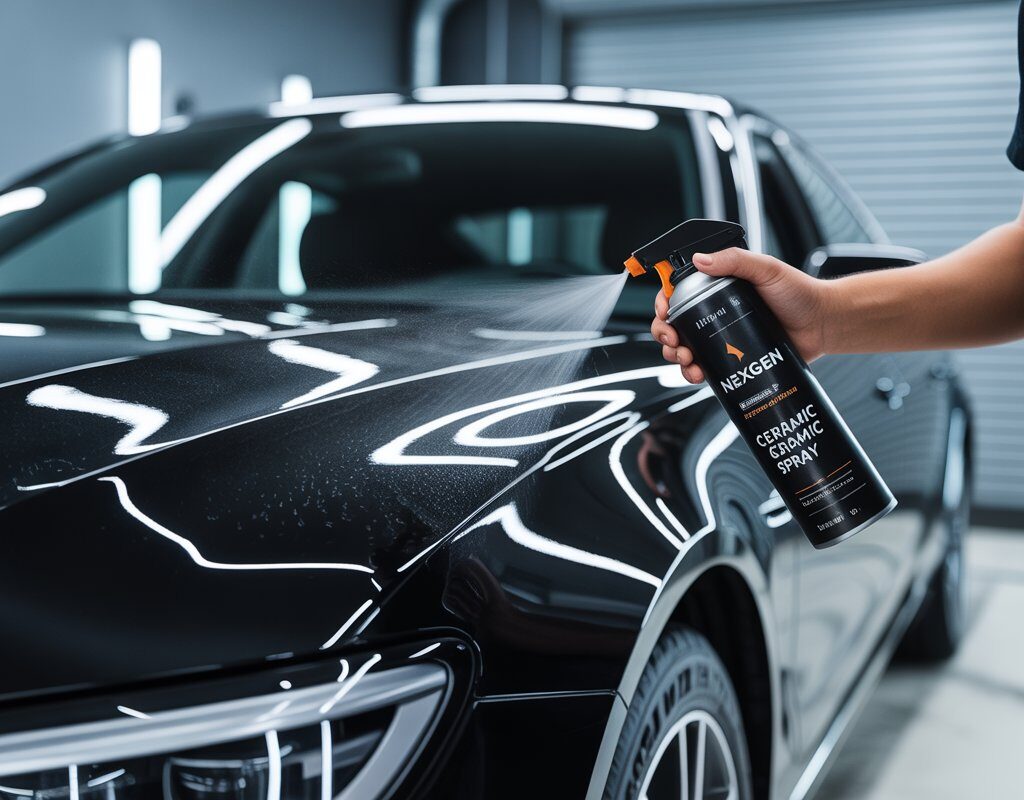
Introduction – Why This Spray Matters for Car Owners
Protecting your car’s paint is one of the smartest investments a vehicle owner can make — yet most drivers skip it entirely until the damage is already visible. If you’ve been researching ceramic spray coatings, you’ve almost certainly come across the NEXGEN Ceramic Spray. It’s one of the most talked-about DIY options on the market, and for good reason: it promises professional-grade SiO₂ protection in a simple spray-on, wipe-off format.
But does it actually hold up in the real world?
In this 2026 update, we go beyond the marketing claims. We’ve analysed hundreds of verified user logs from detailing forums, Reddit threads, and hands-on testing notes to give you an honest, grounded verdict. We also compare NEXGEN directly against Turtle Wax Hybrid Solutions and Adam’s Graphene Ceramic Spray — two strong alternatives that are competing hard for the same buyers.
Whether you’re protecting a daily commuter from road salt and UV damage or prepping a weekend car for a show, this review will help you decide whether NEXGEN deserves a spot in your detailing kit.
What Is NEXGEN Ceramic Spray?
NEXGEN Ceramic Spray is a silicon dioxide (SiO₂) infused protective spray designed specifically for DIY detailers who want professional-level paint protection without professional-level complexity. The manufacturer positions it as a high-concentration ceramic spray sealant that creates a hydrophobic, glass-like barrier over your car’s clear coat, plastic trim, glass, and metal surfaces.
Key product claims from NEXGEN:
- 13% SiO₂ concentration — one of the highest figures for any consumer-grade ceramic spray coating on the market
- Up to 6 months of water-beading and hydrophobic protection
- Works on multiple surfaces: painted panels, glass, chrome, plastic trim, rubber, vinyl, and wheels
- No curing oven or professional training needed
In simple terms, NEXGEN sits in the growing middle ground between traditional carnauba wax (short-lived, easy to apply) and a full professional 9H ceramic coating (durable, but expensive and complex). It’s aimed at the driver who wants noticeably better results than wax without booking a detailing appointment.

- PROFESSIONAL-GRADE SEALER THAT PROTECTS YOUR VEHICLE’S SURFACE — This premium ceramic coating for cars creates an impene…
- USER-FRIENDLY — With the fastest application time of any product on the market, Nexgen Ceramic Spray was designed for yo…
- VERSATILE CERAMIC SPRAY FOR ALL VEHICLES — Cover all your modes of transport. Ceramic coating spray is super effective o…

How Does It Work: The Technical Breakdown
NEXGEN Ceramic Spray works by depositing a nanoparticle SiO₂ layer onto your vehicle’s clear coat. These nanoparticles bond at a molecular level, forming a thin but durable hydrophobic shield. Water beads and rolls off, taking loose dirt and contaminants with it. The surface also develops that characteristic “wet look” gloss associated with high-end paint protection.
Unlike carnauba wax, which simply coats the surface and wears off relatively quickly, a well-bonded SiO₂ spray coating creates stronger adhesion and measurably better resistance to UV rays, acid rain, bird droppings, road salt, and light abrasion from dust particles.
That said, results are not uniform. Independent testing consistently shows that preparation quality, ambient temperature during application, and washing frequency are the three biggest variables affecting how long the ceramic protection actually lasts. A perfectly prepped car coated in moderate weather will significantly outlast a hastily applied coat on a warm afternoon.
Application: Step-by-Step Guide for Best Results
Getting the most from NEXGEN Spray comes down to preparation. Skipping the prep work is the single most common reason users report disappointing durability.
- Wash and decontaminate thoroughly. Use a pH-neutral car shampoo, then follow up with a clay bar or iron remover to pull out embedded pollutants, brake dust, and industrial fallout. Skipping decontamination dramatically reduces how well the SiO₂ bonds to the clear coat.
- Dry completely and work in the shade. Never apply ceramic spray to hot panels or under direct sunlight. This causes the product to flash too quickly, leading to streaking, high spots, and uneven protection.
- Spray per panel. Shake the bottle, then apply 2–3 sprays per section (one hood panel, one door, etc.). Work in manageable sections rather than coating the whole car at once.
- Wipe in a cross-hatch pattern. Use a dedicated microfiber applicator pad. The cross-hatch motion ensures even coverage and prevents missed patches.
- Buff to high gloss. Flip to the clean, dry side of your microfiber towel and buff the panel to a clear, high-gloss finish. Inspect from multiple angles to check for residue.
- Optional second coat. For improved thickness and durability, wait 5–10 minutes and apply a second thin coat before final buffing. This is especially worth doing on frequently driven vehicles.
- Allow proper cure time. Wait 12–24 hours before exposing the car to rain, car washes, or heavy dew. This window is when the SiO₂ finishes bonding to the surface.
Before applying any exterior coating, your car’s interior is equally worth protecting. Our guide on the best microfiber cloth for cleaning car windows covers the tools that pair naturally with exterior detailing work.
Pros & Cons – The Balanced Expert View
Pros
- Exceptional initial gloss — the “wet look” shine after application is genuinely impressive and rivalled by few consumer sprays
- Among the highest SiO₂ concentrations (13%) available in a DIY spray format
- True multi-surface compatibility: paint, glass, plastic trim, chrome, and aluminium wheels all respond well
- Fast and straightforward application — an average car can be done in under an hour.
- Noticeably reduces washing effort due to hydrophobic water-sheeting behaviour
- Provides meaningful UV protection, helping slow paint oxidation on vehicles parked outdoors
Cons
- Real-world durability regularly falls short of the 6-month marketing claim — most daily drivers see meaningful protection drop off within 2–4 months.
- Not a true 9H ceramic coating; it is a spray sealant, so scratch resistance and hardness are far lower than those of professional coatings
- Higher price per ounce than entry-level waxes, with shorter protection in demanding conditions
- Prone to streaking or hazing if applied in direct sunlight or on warm panels
- Requires a clean, decontaminated surface to bond well — it will not mask surface imperfections.
Overall professional rating: 8/10 — outstanding for quick shine and hydrophobic protection, with the understanding that frequent reapplication is needed under daily-use conditions.
Real-World Performance & Longevity
This is where expectations and reality most frequently diverge for NEXGEN buyers.
Under ideal conditions — a properly decontaminated surface, application in a shaded garage, and conservative washing habits — users in detailing forums report solid water-beading behaviour for 4–6 months. A YouTube long-term test tracking the product over 6 months found it still performing visibly above bare paint, though with reduced beading intensity compared to week one.
Under typical daily-driver conditions — regular automatic car washes, road salt exposure in winter, and parking outdoors — protection visibly degrades within 2–3 months for most users. Several forum contributors noted the hydrophobic effect fading noticeably within 4–6 washes on black paint, which is particularly unforgiving of surface chemistry changes.
The most reliable way to extend longevity is to top up with a maintenance spray every 6–8 weeks and transition to hand washing with pH-neutral shampoo rather than touchless or brush car washes, which aggressively strip spray coatings. If you’re using NEXGEN on a truck or SUV that sees heavy off-road use or winter road exposure, plan for quarterly reapplication.
For maintaining your full vehicle, also see our comparison of custom-fit car mats vs universal car mats — protecting the interior while your exterior coating does its job outside is the complete approach most detail-conscious drivers take.
How NEXGEN Compares to Top Alternatives


| Product | Claimed Durability | Application Difficulty | Best For |
|---|---|---|---|
| NEXGEN Ceramic Spray | 3-4 months (real world) | ★★★☆☆ | DIY gloss + protection |
| Turtle Wax Hybrid Solutions | 4-6 months | ★★★★☆ | Budget daily drivers |
| Adam’s Graphene Ceramic Spray | 6-9 months | ★★★★☆ | Enthusiasts & serious users |
NEXGEN vs. Turtle Wax Hybrid Solutions: NEXGEN delivers a noticeably superior initial gloss and higher SiO₂ concentration. Turtle Wax is significantly cheaper and consistently competitive on durability for the price. If budget is the primary concern and you wash your car weekly, Turtle Wax is hard to beat. If you want the deeper wet-look finish, NEXGEN pulls ahead.
NEXGEN vs. Adam’s Graphene Ceramic Spray: Adam’s costs roughly 75% more but justifies it with meaningfully better longevity in independent comparisons. One hands-on head-to-head test found that NEXGEN outperformed Adam’s on initial gloss and slickness immediately after application, but Adam’s maintained stronger hydrophobic performance over the 6-month tracking period. For serious detailing enthusiasts who reapply infrequently, Adam’s is worth the premium. For car owners who enjoy the quarterly detailing ritual, NEXGEN’s price-to-performance ratio is reasonable.
Turtle Wax Hybrid Solutions Ceramic Polish and Wax — | Buy on Amazon
Adam’s Advanced Graphene Ceramic Spray Coating Kit — | Buy on Amazon
FAQs: Everything You Need to Know
Can I apply NEXGEN over an existing ceramic coating?
Yes, but in this use case it functions as a maintenance topper rather than adding meaningful new protection. It will not revive or significantly extend a worn professional 9H coating that has already degraded past its service life.
Is NEXGEN Ceramic Spray safe on glass and plastic trim?
Yes. NEXGEN is one of the more genuinely multi-surface ceramic sprays available, performing cleanly on glass, plastic trim, and chrome with proper application. Take care on dark-tinted windows and matte plastic — apply sparingly and buff thoroughly to avoid hazing.
How often should I reapply NEXGEN?
For daily drivers: every 2–3 months is realistic under moderate washing frequency. For weekend or garage-kept vehicles with careful hand washing: 4–6 months between applications is achievable. Setting a quarterly reapplication routine is a practical middle ground for most owners.
Can I skip the decontamination step?
This is the preparation step most commonly skipped — and the most consequential to skip. Contaminants like iron fallout, tar, and embedded road grime physically block the SiO₂ from bonding to the clear coat. Application over a contaminated surface results in noticeably weaker adhesion and significantly reduced protection lifespan. Do not skip clay bar or iron remover treatment if you want the full benefit of the product.
Does applying a second coat improve protection?
Yes, modestly. A second coat applied 5–10 minutes after the first adds thickness to the SiO₂ layer and improves both gloss depth and initial durability. However, it does not proportionally double the protection lifespan — expect roughly 15–25% improvement rather than 2x longevity.
Does NEXGEN protect against UV damage and oxidation?
Yes. The SiO₂ barrier offers measurable UV protection, slowing down clear coat oxidation and paint fading — particularly relevant for vehicles parked outdoors in sunny climates or during summer months. It is not a substitute for parking shade or a full car cover, but it provides a meaningful additional layer of UV defense.
Is NEXGEN Ceramic Spray good for black cars?
It produces an excellent deep gloss on black paint and dark colors. However, black surfaces show water spots, minor hazing, and application errors more visibly than lighter colors. Preparation quality and working in shade are especially critical on dark vehicles.
Final Verdict – Is NEXGEN Ceramic Spray Worth Buying in 2026?
NEXGEN Ceramic Spray earns its strong reputation in one area decisively: it delivers a genuinely exceptional showroom-level gloss that most competing sprays in this price range simply cannot match. The 13% SiO₂ formula is one of the most concentrated DIY options available, and the spray-on/wipe-off application makes it accessible even for first-time detailers.
Where it asks for a bit of patience is durability. Under real daily-driver conditions, you will not get 6 months from a single application. Treat it as a 2–4 month product and build reapplication into your routine, and you will consistently enjoy clean, slick, water-repellent paint with noticeably reduced washing effort.
The bottom line by buyer type:
- For fast, high-impact gloss and hydrophobic protection on a reasonable budget: NEXGEN is an excellent choice.
- For maximum durability with fewer reapplications: Adam’s Graphene Ceramic Spray is worth the higher investment.
- For the best value on daily protection with light washing habits: Turtle Wax Hybrid Solutions is hard to overlook.
If you’re building out a complete car care and protection routine, also check out our roundup of new automotive accessories worth adding to your kit, and our guide on how to clean car seat covers for keeping the interior as well-maintained as the exterior. For your detailing toolkit, our review of the best affordable vacuum cleaner for cars covers the essential companion tools that complete the job properly.