Your TPE floor mats are caked in dried mud, road salt residue, or last week’s spilled coffee, and a quick wipe-down hasn’t touched them. Getting them clean again takes about 10 minutes and doesn’t require anything you don’t already have under the sink.
Quick Answer: Remove the mats from your car, shake off loose dirt, then wash them with mild dish soap diluted in warm water using a soft-bristle brush, paying extra attention to the textured grooves. Rinse thoroughly, then air-dry the mats completely — usually 1 to 3 hours in the sun — before reinstalling them.
Table of Contents
What You Need to Know
- Mild dish soap and warm water clean TPE mats safely — skip bleach, ammonia, and solvent-based cleaners.
- A soft-bristle brush gets dried mud out of the textured grooves; stiff or wire brushes can scuff the surface.
- Full drying takes 1 to 3 hours in sun or open air. Reinstalling a damp mat traps moisture against your carpet.
- Grey, chalky patches are usually mineral deposits from hard water, not dirt, and need a different fix than regular grime.
- Clean light-use mats every 3 to 4 weeks. Clean beach, off-road, or winter-salt mats weekly.
What Is TPE and Why Does It Clean Differently?
TPE (thermoplastic elastomer) is a synthetic material that combines the flexibility of rubber with the moldability of plastic, and it’s used in car mats specifically because its surface is non-porous.
That non-porous structure is the whole reason TPE mats clean up faster than carpet. Dirt and liquid sit on top of the material instead of soaking into fibers, so a rinse lifts most of it without any scrubbing at all.
Carpet mats work the opposite way. Moisture gets trapped deep in the fibers, which is what causes the musty smell and mold risk that carpet mats are known for. According to KRAIBURG TPE, TPE is designed to maintain its flexibility across both hot and cold conditions while offering strong resistance to chemical exposure. This combination of flexibility and durability can help TPE-based materials withstand everyday wear better than lower-quality rubber compounds that may become brittle or deteriorate over time.
Select 41 more words to run Humanizer.
What You’ll Need
- Mild dish soap (a few drops) or a pH-neutral car shampoo
- A bucket of warm water — not hot, since heat can warp TPE over repeated washes
- A soft-bristle brush or old toothbrush for the grooves
- A microfiber towel
- A garden hose (optional, for rinsing)
How to Clean TPE Floor Mats Step by Step
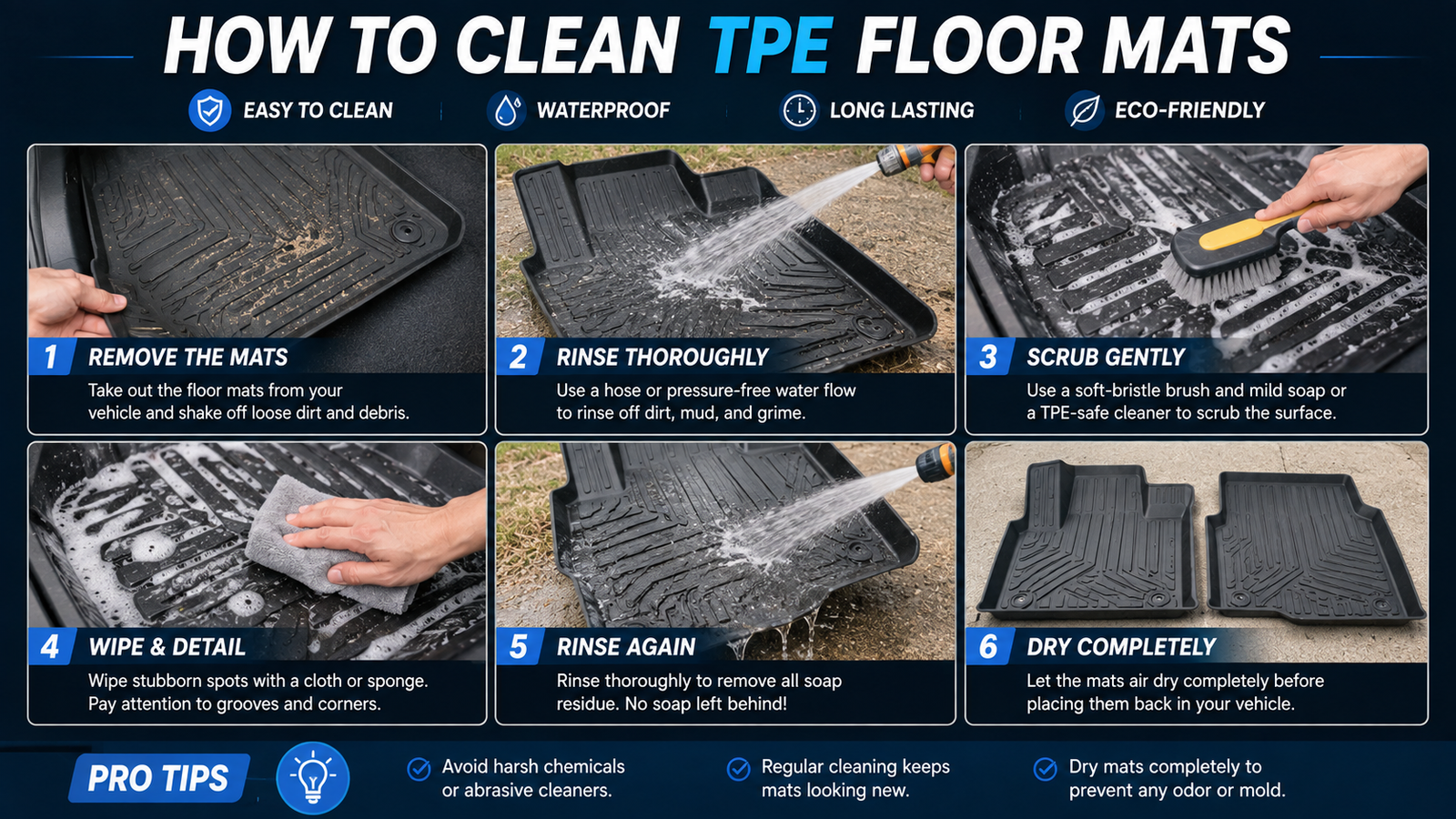
Step 1: Remove the mats completely. Lift each mat straight out of the footwell. If the driver’s side mat clips to an anchor point, release the clip first so you don’t tear the mounting tab.
Step 2: Shake off loose dirt outside, not in the garage. Hold each mat by two corners and shake it firmly over grass or a driveway. This one step removes most of the dry debris before any liquid touches the mat.
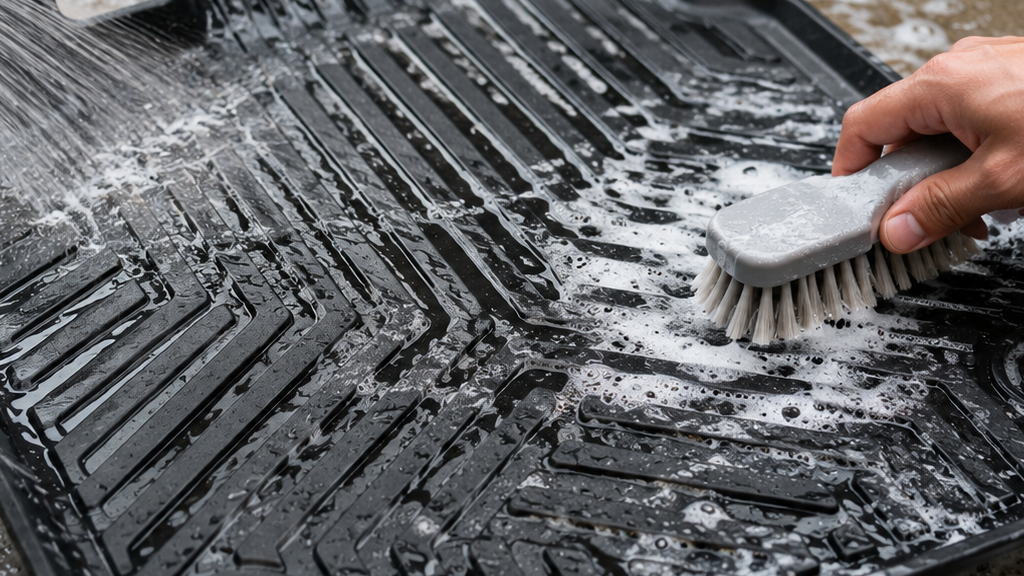
Step 3: Wash with diluted mild soap. Mix about a tablespoon of dish soap into a gallon of warm water. Apply it with a soft cloth or brush and work it across the whole surface.
Step 4: Scrub the textured grooves for 30 to 60 seconds per mat. This is where dried mud and grit actually hide. A quick wipe of the flat surface misses it entirely, so use small circular motions and go slow enough not to bend the raised channel walls.
Step 5: Rinse until the water runs clear. Soap residue left in the grooves attracts new dirt fast and can leave the surface feeling slightly tacky once it dries.
Step 6: Dry completely before reinstalling — 1 to 3 hours minimum. Lay the mats flat in the sun or prop them against a fence in open air. Wiping with a microfiber towel first cuts drying time roughly in half. Skip the hair dryer or space heater—concentrated heat can warp thin sections of the mat.
Can You Hose Off or Pressure-Wash TPE Floor Mats?
Yes. TPE floor mats can be hosed off safely, and a pressure washer works too as long as you keep it on a low-pressure or “rinse” setting and stay at least 12 inches from the surface.
A pressure washer held too close, or one run on a concentrated turbo nozzle, can peel back a mat’s raised edges or force water underneath it if the mat is still installed. Always pull the mats out of the car before spraying, and aim from the top edge downward so debris flushes out of the channels instead of getting driven in deeper.
What Cleaner Is Safe for TPE Floor Mats?
Standard dish soap—Dawn is the one most detailing guides default to—diluted in water is safe for TPE mats. A pH-neutral car shampoo works as a slightly gentler alternative.
Avoid bleach, ammonia-based glass cleaner, and any solvent or petroleum-based degreaser. Products marketed as “all-purpose cleaners” or “heavy-duty degreasers” are the most common cause of premature TPE fading, because they’re formulated to strip oil residue and don’t distinguish that from the mat’s own surface finish.
Straight vinegar has its place too, but only diluted and only for specific stains—covered below.
How to Remove Specific Stains From TPE Mats
Different messes need different fixes. This reference table covers the four situations TPE mats deal with most often:
| Stain Type | Best Cleaner | Method | Notes |
|---|---|---|---|
| Dried mud | Water + soft brush | Let it dry fully, then brush off before wet-washing | Never scrub wet mud — it smears deeper into the grooves |
| Oil or grease | Dish soap, applied undiluted | Apply directly to the spot, let sit 5 minutes, scrub, rinse | A sprinkle of corn starch first helps lift a fresh grease spot |
| Coffee or drink spills | Mild soap + warm water | Blot excess liquid first, then wash normally | Acts fastest within the first hour, before it sets |
| Road salt / mineral haze | White vinegar, diluted 1:1 with water | Apply, let sit 2–3 minutes, rinse thoroughly | Rinse well — any vinegar smell fades within a day |
Save or screenshot this stain chart — it covers the situations that actually come up, so you’re not guessing next time.
How Long Do TPE Mats Take to Dry?
Most TPE mats are fully dry within 1 to 3 hours when air-dried in direct sun or a well-ventilated spot, and up to 6 hours if drying indoors without airflow.
The mat material itself doesn’t need to “cure” or dry slowly—the real risk is trapping moisture against your car’s carpet underneath it, which is what actually causes musty smells and, over time, mold. A dry mat on a slightly damp carpet still traps that moisture, so give the footwell a chance to air out too if it got wet during cleaning.
How to Restore Faded or Chalky TPE Floor Mats
A grey, chalky film on TPE mats is usually mineral deposits left behind by hard water evaporating in the grooves—not dirt and not sun damage, which is the mistake most people make when trying to fix it.
Regular soap won’t touch mineral buildup, since soap is designed to lift oil and organic grime, not mineral scale. A diluted vinegar rinse (the same 1:1 mix from the stain table above) breaks down the deposits and restores the matte finish within one wash.
Skip glossy “tire shine” style dressings on mats. They make the surface slippery underfoot, which is a real safety concern on a driver’s-side mat sitting inches from the pedals.
How Often Should You Clean TPE Floor Mats?
- Light daily commuting: every 3 to 4 weeks
- Kids, pets, or frequent grocery runs: every 2 weeks
- Beach, off-road, or job-site use: weekly
- Winter with road salt: weekly—salt left sitting for weeks is what accelerates the chalky-film problem above
Common Mistakes to Avoid
- Reinstalling a mat before it’s fully dry
- Using bleach or ammonia-based cleaners
- Scrubbing dried mud instead of letting it dry and brushing it off first
- Wiping only the flat surface and skipping the textured grooves
- Speeding up drying with a hair dryer or space heater
- Applying silicone-based tire-shine dressing to the mat surface
When Cleaning Isn’t Enough
If your mats keep cracking, feel brittle instead of flexible, or the grey film comes back within days of cleaning it off, that’s usually a sign of a cheaper TPE blend rather than anything you’re doing wrong.
If you’re at the point of shopping for a replacement, Best Car Mats 2026: Custom-Fit TPE Liners by Trim breaks down which liners are actually built to hold up to this kind of cleaning routine long-term.
Get the Printable TPE Mat Cleaning Cheat Sheet.
Want the stain chart and cleaning schedule above as a printable page for your glovebox? Grab the free cheat sheet below and we’ll send it straight to your inbox, along with the occasional car-care guide worth your time.
FAQ
Are TPE floor mats safe?
TPE is generally free of the phthalates and BPA found in some PVC-based rubber, and it’s used across food-contact and medical products under FDA and REACH guidelines when manufactured to those standards. Quality varies by manufacturer, though — cheaper blends may not meet the same standards, so check the product listing if this matters to you. As a material for daily vehicle use, TPE is considered low-risk.
Can I use Dawn dish soap on my TPE car mats?
Yes. A few drops of standard dish soap like Dawn, diluted in a gallon of warm water, are one of the most commonly recommended cleaners for TPE floor mats. It’s mild enough not to damage the surface finish, cuts through grease and road grime effectively, and rinses away completely without leaving residue in the grooves—provided you rinse thoroughly afterward.
What is the best thing to clean TPE floor mats with?
Diluted mild dish soap and warm water handles the vast majority of dirt, mud, and everyday grime on TPE mats. For mineral haze or road-salt residue specifically, a 1:1 water-and-vinegar solution works better than soap. Avoid bleach, ammonia, and petroleum-based degreasers—they break down the material’s flexibility over repeated use and cause premature fading.
How do I make TPE floor mats look new again?
Start with a full soap-and-water wash, focusing on the textured grooves where grime hides. If a grey or chalky film remains afterward, it’s likely mineral buildup from hard water rather than dirt, and a diluted vinegar rinse typically clears it. Skip glossy “tire shine” style dressings since they can make the matte surface slippery.
Is TPE the same material as rubber?
No. TPE and natural or synthetic rubber feel similar underfoot, but TPE is manufactured differently and tends to resist cracking, fading, and temperature extremes better over time. If you’re weighing TPE against true rubber for your car, Best Rubber Floor Mats for Cars breaks down how the two compare.
Can TPE floor mats go in a washing machine?
No. Washing machines aren’t built for the size, weight, or rigid grooved shape of TPE mats, and the agitation cycle can crack or warp the material at the fold points. Hand-washing with a hose, bucket, and soft brush takes about the same amount of time without the risk.
What to Do Next
Now that your current mats are clean, it’s worth checking whether they’re actually holding up the way TPE should. If yours are cracking, thinning, or losing their fit, Best Car Mats 2026: Custom-Fit TPE Liners by Trim walks through which liners are worth the switch.
If you’re weighing TPE against a traditional option instead, Best Rubber Floor Mats for Cars covers how the two materials compare side by side.