Table of Contents
Your neoprene seat covers just let you down—a drink spilled, the dog came in soaked, or rain got in during a hasty grocery run, and now there’s a wet patch on the seat underneath. You bought them because the label said waterproof.
The material is usually doing its job. The answer to why water still got through depends on one spec almost no product page mentions and one detail that has nothing to do with the neoprene itself.
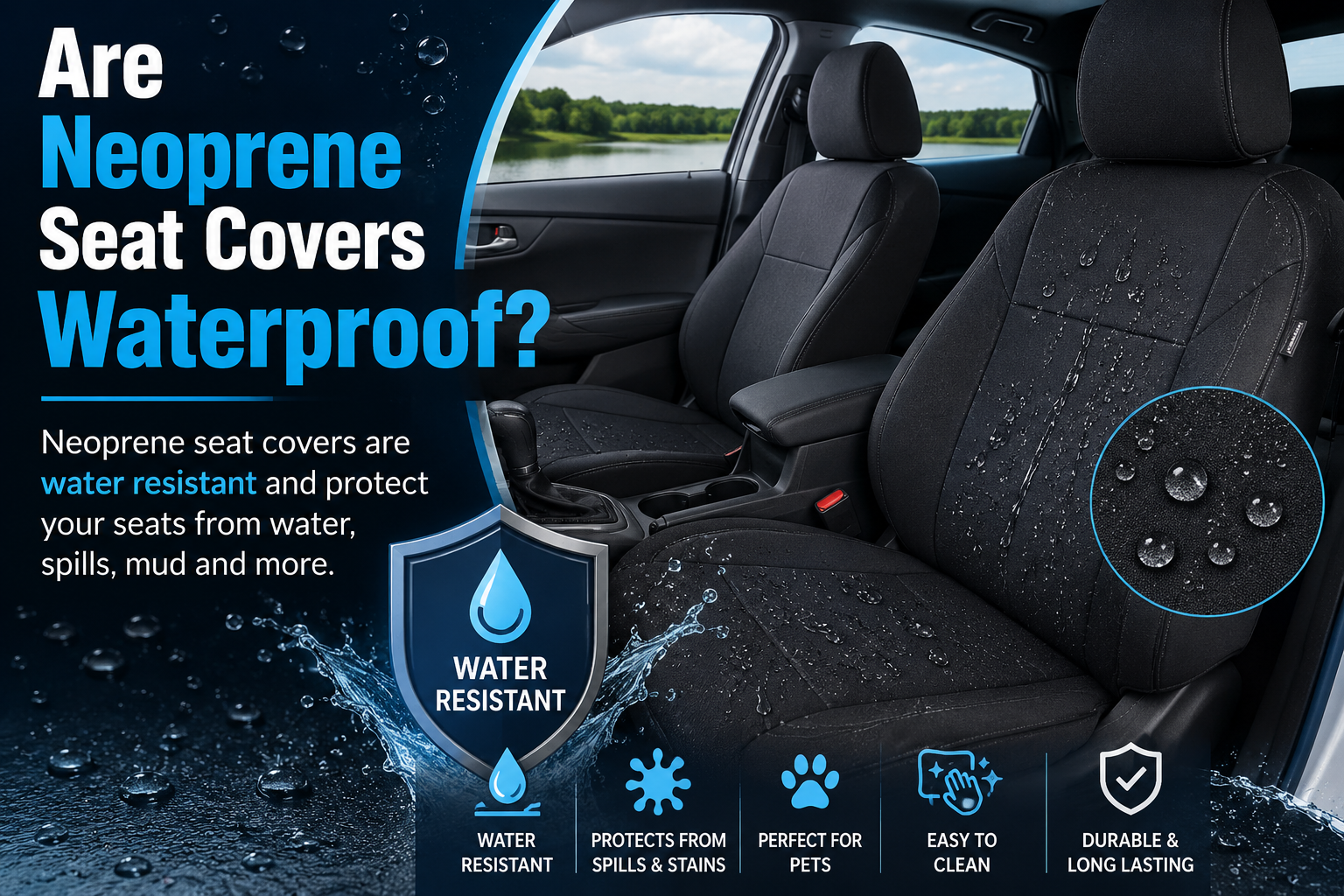
Quick Answer: Closed-cell neoprene resists water very well and is commonly marketed as waterproof, but according to ASTM D1056 testing, it still absorbs roughly 1–5% of its weight in water. The material itself rarely fails first—stitched seams and cutouts are the more common points where water actually gets through.
What You Need to Know
- Closed-cell neoprene is highly water-resistant, not 100% waterproof—expect roughly 1–5% water absorption by weight under ASTM D1056 testing.
- Open-cell neoprene is a different, cheaper structure that soaks up water like a sponge, and it’s sold under the same “neoprene” name—check the label.
- Seams and stitching, not the neoprene panel itself, are the most common places covers actually leak.
- Sealed or taped seams outperform stitched-only seams once you’re dealing with standing water or sustained rain, not just a quick splash.
- Neoprene traps more heat than mesh or fabric, but ventilation panels and moisture-wicking linings close most of that gap.
Closed-Cell vs. Open-Cell Neoprene: The Spec That Actually Decides the Outcome
Whether a neoprene seat cover holds up to water comes down to one manufacturing choice: closed-cell or open-cell structure. Closed-cell is what you want. Open-cell neoprene is not suitable, even though both types are sold under the same “neoprene” label.
Closed-cell neoprene is a foam structure where each air pocket is sealed off from its neighbors, made by introducing gas into the rubber compound under pressure. Individually sealed cells are what block water from traveling through the material. Open-cell neoprene has interconnected pockets instead, closer to a kitchen sponge, so water flows in one side and works its way through.
Closed-cell neoprene isn’t 0% water absorbent—it’s just close enough that it functions as waterproof for seat-cover purposes. According to ASTM D1056, the industry standard for closed-cell sponge rubber, water absorption tops out around 1–5% of the material’s weight after submersion testing. That’s a real number, not a marketing “yes.”
How to check which one you’re buying
Look for the words “closed-cell,” “CR foam,” or an ASTM D1056 classification code (something like 2C1 or 2C2) on the spec sheet. If a listing only says “neoprene” with no cell structure mentioned anywhere, that’s worth asking the seller about directly—manufacturers using closed-cell foam generally advertise it, because it’s the better spec.
Read our guide: Best Waterproof SUV Seat Covers (Buyer’s Guide + Reviews)
Where Water Actually Gets In (It’s Rarely the Neoprene Itself)
Most water intrusion on a neoprene seat cover happens at the seams, not through the panel material. Stitched seams put thousands of tiny needle holes through an otherwise water-resistant fabric, and each hole is a potential entry point.
Here’s the counterintuitive part: a cover can use fully closed-cell neoprene and still leak, because thread holes bypass the material’s water resistance entirely. A cover with unsealed, stitched-only seams will leak in sustained rain even if every panel is 100% closed-cell neoprene. Cutouts for seatbelt buckles, levers, and headrest posts create the same kind of gap.
For a one-time spill or splash, closed-cell neoprene with sealed seams keeps the seat underneath dry without much fuss. For sustained exposure—a soaked wetsuit, a muddy dog, or standing water on a boat launch—seam construction matters more than the neoprene grade itself.
Neoprene Waterproof Rating Chart
| Cover Type | Water Resistance | Best For | Check the Label For |
|---|---|---|---|
| Closed-cell neoprene, stitched seams | Good — short spills, light rain | Daily driving, occasional weather | “Closed-cell” or an ASTM D1056 code |
| Closed-cell neoprene, sealed/taped seams | Very good — standing water, sustained rain | Beach trips, boat launches, worksites | “Sealed seams” or “taped seams” stated explicitly |
| Open-cell neoprene (any seam type) | Poor — absorbs and holds water | Not recommended for wet use | Often unlabeled — assume open-cell if unstated |
| Neosupreme (neoprene-look knit backing) | Fair — resistant surface, absorbent backing | Style-focused, light spills only | “Neosupreme” stated explicitly, not just “neoprene” |
Save or screenshot this waterproof rating chart — it covers what to check on the label before you buy, not just what the ad copy claims.
Neoprene vs. Neosupreme vs. Vinyl vs. Cordura: Which Actually Protects Best in Rain?
For pure waterproofing, vinyl and closed-cell neoprene with sealed seams perform similarly well. Neosupreme and untreated Cordura fall behind because of their fabric backing, even when the surface layer resists water.
| Material | Waterproofing | Comfort | Best Use |
|---|---|---|---|
| Closed-cell neoprene (sealed seams) | Very good | High — flexible, insulating | Outdoor/active lifestyle, kids, pets |
| Vinyl | Excellent | Low — stiff, gets hot | Budget-focused, easy wipe-down |
| Neosupreme | Fair | High | Style-focused, light spills only |
| Waterproof-treated Cordura | Good | Moderate | Rugged use, abrasion resistance |
Does the Waterproofing Trade Off Against Comfort? Heat and Sweat
Neoprene isn’t a breathable material by nature, so you can sweat more on a neoprene seat cover than on mesh or cloth in hot weather. Ventilation panels and moisture-wicking linings close most of that gap on covers designed for it.
The same closed-cell structure that blocks water also traps body heat, since air can’t move through sealed cells any more than water can. Thinner neoprene, typically 2mm versus 3mm or more, trades some insulation for noticeably less heat retention if hot-climate comfort matters more to you than cold-weather warmth.
Pros and Cons of Neoprene Seat Covers
Pros:
- Strong spill and splash resistance when the seams are sealed
- Resists UV fading better than most fabric alternatives
- Tear-resistant and holds a snug, athletic fit
- Wipes clean quickly, no special detergents required for light use
Cons:
- Less breathable than mesh or cloth in hot weather
- Heavier than basic polyester covers
- “Waterproof” performance varies by cell structure and seam construction—the label doesn’t always spell this out.
- Priced higher than entry-level fabric covers
Keeping Neoprene Waterproof Long-Term (Washing Without Ruining It)
Neoprene seat covers can be hand-washed without losing their water resistance, but machine washing on anything but a cold, gentle cycle risks breaking down the closed-cell structure over time.
- Rinse with cold water first. Remove loose dirt and mud before any soap touches the surface—this alone prevents most staining.
- Use a mild, non-abrasive detergent. Skip bleach or ammonia-based cleaners, which break down rubber compounds faster than normal wear does.
- Hand-scrub stitching and seams with a soft brush. This is where grime builds up and eventually works its way into the needle holes.
- Air dry flat or hung, away from direct sun and heat sources. High heat is the most common way the material’s flexibility degrades over years of use.
Common Mistakes When Buying or Caring for Neoprene Seat Covers
- Assuming “neoprene” alone guarantees waterproofing. Always confirm closed-cell construction before buying.
- Ignoring seam construction entirely. A fully closed-cell cover with unsealed seams still leaks in sustained rain.
- Machine-drying on heat. This is the single most common way owners shorten the material’s lifespan.
- Letting spills sit. Closed-cell neoprene resists water, but that 1–5% absorption climbs the longer moisture stays in contact with it.
FAQ
Are neoprene car seat covers waterproof? Closed-cell neoprene is highly water-resistant and functions as waterproof for everyday spills and light rain, but it isn’t 100% impermeable—testing under ASTM D1056 shows roughly 1–5% water absorption by weight. Seams and stitching are more likely to let water through than the neoprene panels themselves.
What are the pros and cons of neoprene seat covers? Pros include strong spill resistance with sealed seams, UV and tear resistance, and a snug athletic fit. Cons include lower breathability than fabric or mesh, added weight, a higher price point, and waterproof performance that varies depending on cell structure and seam construction.
What is the best material for waterproof car seat covers? Vinyl and closed-cell neoprene with sealed seams both perform well for pure waterproofing. Vinyl edges out neoprene on total water resistance, but neoprene offers more comfort and insulation for regular use, while neosupreme and untreated Cordura fall behind both.
Are neoprene seat covers too hot for hot weather? Neoprene is not naturally breathable, so it can trap more heat than mesh or cloth covers in warm weather. Covers with ventilation panels or moisture-wicking linings and thinner 2mm neoprene rather than 3mm+ reduce heat buildup significantly.
Are neoprene seat covers water-resistant? Yes — closed-cell neoprene is engineered specifically for water resistance, which is why it’s used in wetsuits and diving gear. Open-cell neoprene, sold under the same name, does not share this property and absorbs water readily.
Do neoprene seat covers absorb water? Closed-cell neoprene absorbs a small amount, typically 1–5% of its weight per ASTM D1056 testing, which is low enough to function as waterproof in practical use. Open-cell neoprene absorbs significantly more and isn’t recommended for wet conditions.
Do neoprene seat covers leak? They can, almost always at the seams rather than through the neoprene itself. Stitched-only seams create needle holes that let water in during sustained rain or standing water, while sealed or taped seams close that gap.