A juice box just tipped over on the passenger seat, or your toddler’s diaper leaked mid-drive, and now a stain is soaking into your car seat cover before you’ve even parked. The good news: most car seat cover stains come out completely when you treat them in the right order, with the right cleaner, before they set.
Quick disclosure: this guide is reader-supported. Some product links below earn CarSeatPanel a small commission, at no extra cost to you.
Quick Answer: To remove a stain from a car seat cover, scrape or blot away excess material first, then apply a fabric-safe enzyme or oxygen-based cleaner, let it sit 5–10 minutes, agitate gently with a soft brush, and blot dry with a clean microfiber cloth. Fresh stains usually lift in one pass; set-in marks may need two or three repeats.
What You Need to Know:
- Removable covers can go straight into the wash; fixed covers need spot-cleaning in place, and the method changes accordingly.
- Match the cleaner to the stain: protein-based messes (milk, spit-up, blood) respond to hydrogen peroxide, while oily food stains need dish soap or a degreaser.
- Never combine bleach with an ammonia-based cleaner—the mix releases toxic chloramine gas, according to the CDC.
- Diaper blowouts and vomit need the solids removed and an odor-neutralizing enzyme cleaner, not just a wipe-down of the visible mark.
- A screenshot-ready reference chart further down gives exact dwell times for every stain type covered here.
Before You Start: Check Your Cover Type
The right method depends on whether your seat cover comes off the seat or stays attached.
Removable & Machine-Washable Covers
Many neoprene, cotton-blend, and knit aftermarket covers unzip, unclip, or stretch off the seat frame entirely. If your cover’s care tag allows machine washing, a full wash cycle removes far more of a stain—and any lingering odor—than spot-cleaning ever will. Unclip the cover, shake out loose debris, and check the care tag for water temperature and drying instructions before doing anything else. If you’re not sure how your specific cover detaches, our guide on how to remove car seat covers walks through the process seat by seat.
Fixed-in-Place Covers (Spot-Clean Method)
Covers sewn directly to the seat foam, or factory-installed upholstery, have to be treated in place. Everything in the step-by-step section below is written for this scenario, and it also works on removable covers you’d rather not fully wash.
How to Remove Stains From a Car Seat Cover (Step-by-Step)
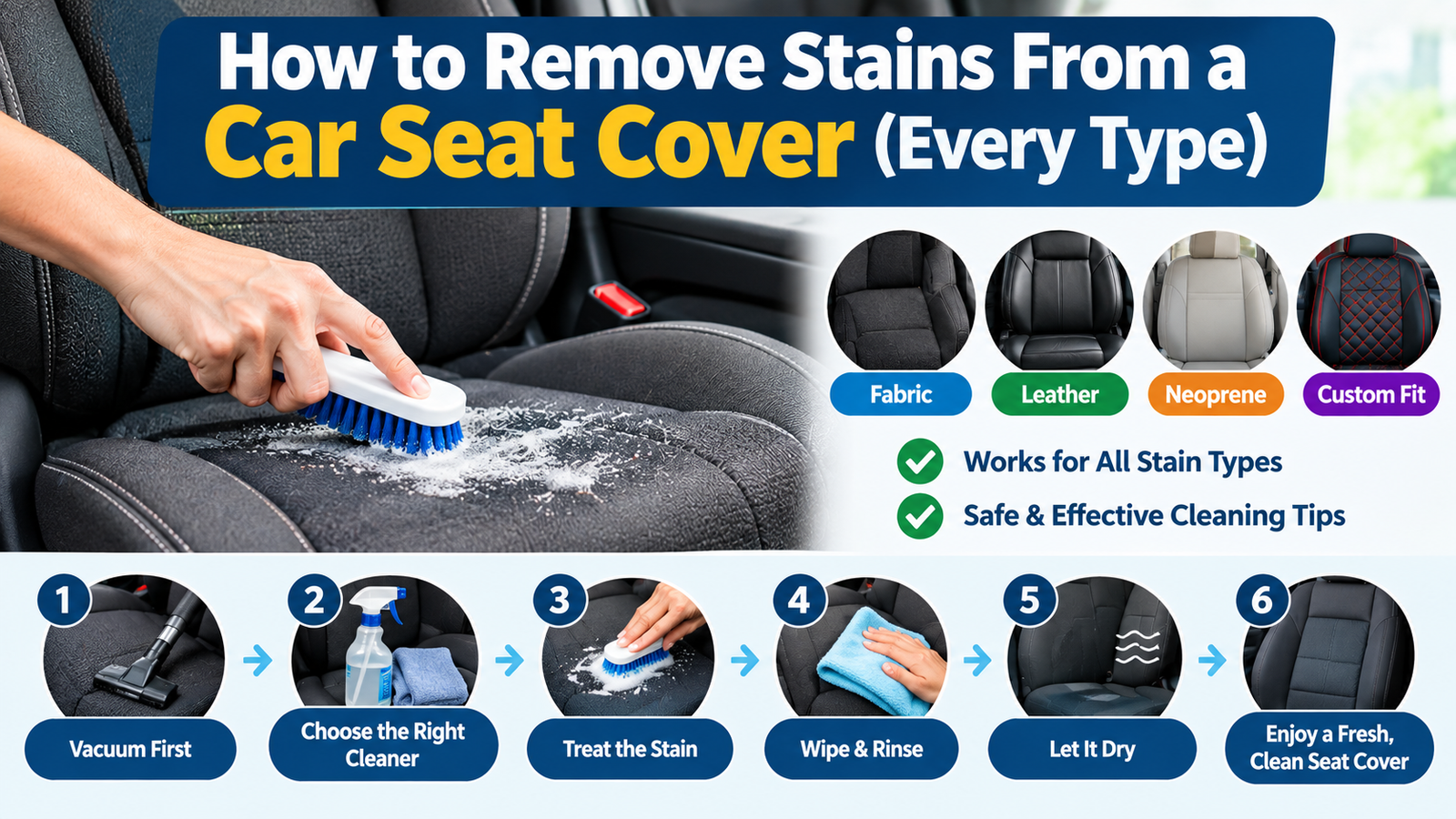
This is the base method for almost any fresh stain. Stain-specific adjustments follow in the next section.
- Scrape or blot away excess material. Use the edge of a spoon or a stiff piece of card for anything solid or semi-solid, and a clean cloth for liquid. Work from the outside of the stain inward so you don’t spread it.
- Spot-test your cleaner. Apply a small amount to a hidden area of the cover—under the headrest or along a seam—and wait 60 seconds to check for color change.
- Apply your cleaner and let it dwell. Spray or dab the cleaner directly onto the stain and let it sit for 5–10 minutes, depending on the stain type in the chart below.
- Agitate gently with a soft-bristled brush. Small circular motions lift the stain to the surface without fraying the fibers. Avoid a stiff brush on any fabric cover.
- Blot dry with a clean microfiber cloth. Press rather than rub, switching to a dry section of the cloth as it picks up moisture.
- Air-dry with the windows cracked. Direct sunlight and airflow speed drying and help prevent the musty smell that comes from a seat cover drying slowly.
Stain-by-Stain Removal Guide
Food & Drink Stains
Coffee, juice, and soda stains respond well to a simple detergent solution. Mix 1 tablespoon of dish soap with 2 cups of cool water, apply it to the stain, and let it sit for 5 minutes before blotting. For sugary drinks that leave a stiff, crusty residue after they dry, dampen the area first so the sugar softens before you start scrubbing.
Milk, Spit-Up & Baby Formula Stains
Milk, formula, and spit-up are protein-based, which means hot water is the wrong instinct here—it actually cooks the proteins into the fibers and sets the stain rather than lifting it. Cold water is correct, even though it feels backwards.
According to the University of Georgia Extension, 3% hydrogen peroxide applied directly to a protein-based stain for 1–3 minutes breaks the stain down effectively before you rinse and blot. Follow it with a light enzyme cleaner to handle any lingering sour-milk smell, since the peroxide addresses the visible stain but not the odor.
Poop & Diaper Blowout Stains
Remove every solid piece first, using a plastic bag turned inside out over your hand, before you introduce any liquid or cleaner. Rinse the area with cold water from the back of the fabric where possible, pushing the residue out rather than further into the cover.
Once the visible mess is gone, treat the area with an enzyme cleaner made for organic waste—the same category sold for pet accidents works well. Let it dwell for at least 10 minutes, since enzyme cleaners need that time to fully break down the waste compounds responsible for the smell, not just the stain. For a homemade version, Cornell Cooperative Extension recommends ½ teaspoon of an enzyme-containing detergent stirred into ½ cup of warm water for spot treatment.
Blood, Grease & Ink Stains
For blood, the same 3% hydrogen peroxide method used for milk applies, always with cold water and never hot. For grease and oil, sprinkle cornstarch or baking soda over the stain, let it absorb the oil for 15 minutes, vacuum it up, and then treat the remaining mark with dish soap. For ink, dab — don’t rub — with a cotton ball soaked in rubbing alcohol, switching to a clean section of the cotton ball frequently so you’re not reapplying the ink you just lifted.
Stain-Cleaning Reference Chart (By Fabric Type)
| Stain Type | Best Cleaner | Amount / Dilution | Dwell Time | Safe on Fabric Covers | Safe on Leatherette/Vinyl |
|---|---|---|---|---|---|
| Milk, spit-up, formula | 3% hydrogen peroxide | Apply directly, undiluted | 1–3 minutes | Yes (spot-test first) | Use with caution — can lighten pigment |
| Poop / diaper blowout | Enzyme cleaner | Per label, or DIY ½ tsp + ½ cup warm water | 10+ minutes | Yes | Yes |
| Coffee, juice, soda | Dish soap solution | 1 tbsp soap + 2 cups cool water | 5 minutes | Yes | Yes |
| Blood | 3% hydrogen peroxide | Apply directly, undiluted | 1–3 minutes | Yes (spot-test first) | Use with caution |
| Grease / oil | Cornstarch, then dish soap | Sprinkle to cover stain | 15 minutes (absorption) | Yes | Yes |
| Ink | Rubbing alcohol | Dab with soaked cotton ball | Until lifted, dab repeatedly | Yes (spot-test dark fabrics) | Yes |
| Pet urine / vomit | Enzyme cleaner | Per product label | 10+ minutes | Yes | Yes |
Save or screenshot this reference chart—it covers dwell times and dilution ratios for every stain type in this guide, so you don’t have to scroll back to find them next time.
Common Mistakes to Avoid
Rubbing a fresh stain instead of blotting is the single most common mistake, and it does two things wrong at once: it spreads the stain outward and grinds it deeper into the fibers. Blotting always beats rubbing, no matter how tempting the scrubbing motion feels.
Skipping the spot test is the second most costly mistake, especially on colored or patterned covers, since hydrogen peroxide and some enzyme cleaners can lighten dye in as little as a minute of contact. Using hot water on protein-based stains sets them permanently, as covered above. And treating only the visible stain on a diaper or vomit mess, without the enzyme step, means the smell comes back within a day or two even though the mark itself is gone.
What NOT to Use on a Car Seat Cover
Never mix bleach with an ammonia-based cleaner. According to the CDC, ammonia reacts with chlorine bleach and other halogens, releasing a gas that’s dangerous to breathe even in small amounts. If you’ve already used a glass or all-purpose cleaner containing ammonia on the area, rinse it completely and let it dry before reaching for anything bleach-based.
Avoid full-strength chlorine bleach on any colored fabric cover—it will strip the dye along with the stain. On neoprene and leatherette covers specifically, repeated use of vinegar-based solutions can dull or degrade the protective coating over time, so treat vinegar as a backup method rather than a first choice for those materials. And skip a stiff-bristled brush on any fabric cover; it frays fibers and can leave the treated spot looking worn even after the stain itself is gone.
Best Stain Remover for Car Seat Fabric
For most fabric seat covers, a dedicated enzyme or oxygen-based upholstery cleaner outperforms household dish soap on tougher, older stains, mainly because it’s formulated to keep working through the full dwell time instead of drying out on the surface. is a reasonable pick if you want one bottle that handles food, drink, and pet stains without mixing a different solution for each one.
If you’re dealing with stains often enough that you’re reading this more than once, it’s worth asking whether the cover itself is the problem. A cover with a waterproof or stain-resistant outer layer stops most spills from reaching the fabric at all, which is a different fight than removing a stain after the fact. Our best waterproof seat cover roundup breaks down which materials actually hold up to daily spills.
How to Prevent Future Stains
Keep a small bottle of your enzyme or oxygen-based cleaner in the car itself, since treating a stain in the first 10 minutes is dramatically easier than treating it after it’s dried overnight. Wipe the seat cover down weekly with a damp microfiber cloth as routine maintenance, separate from full stain treatment. And if a child, food, or drink is a daily fixture in your vehicle, a waterproof seat cover layer prevents most stains from reaching the fabric in the first place.
FAQs
Can you machine wash or dry a stained car seat cover?
If your cover is removable and the care tag allows it, a full wash cycle removes stains and odor more thoroughly than spot-cleaning. Drying is where most damage happens, though — our guide on putting car seat covers in the dryer covers which materials can handle heat and which need to air-dry instead.
Is vinegar or baking soda safe to use on a car seat cover?
Both work as budget alternatives for light stains, but neither is as reliable as an enzyme cleaner on set-in or protein-based stains. Vinegar’s acidity can dull protective coatings on neoprene or leatherette covers with repeated use, so it’s better reserved as a backup than a default choice on those materials.
How do I remove a stain from a car seat cover?
Scrape or blot away any excess material, apply a fabric-safe cleaner matched to the stain type, let it dwell for 5–10 minutes, agitate gently with a soft brush, and blot dry with a clean cloth. Most fresh stains lift in a single pass, while older or set-in stains typically need two or three repeats before the mark is fully gone.
What is a good stain remover for car seats?
An enzyme-based or oxygen-based upholstery cleaner handles the widest range of stains, including food, drink, and pet or baby messes, without needing a separate product for each type. Dish soap diluted in cool water is a solid backup for fresh food and drink spills when you don’t have a dedicated cleaner on hand.
How do you get tough, set-in stains out of car seat fabric?
Repeat the standard cleaning method two to three times rather than increasing the cleaner’s strength, since a stronger mix raises the risk of discoloring the fabric. For stubborn marks, let the enzyme or oxygen-based cleaner dwell for the full 10 minutes each time, and let the cover dry completely between attempts before judging whether the stain is gone.
What to Do Next
If the stain led you to take the cover off entirely, how to remove car seat covers walks through the detachment process for most seat types. If you’ve already washed the cover and you’re wondering how to dry it safely, can you put car seat covers in the dryer covers, which fabrics tolerate heat? And if this isn’t the first stain you’ve dealt with this month, our best waterproof seat covers roundup is worth a look before the next spill happens. (Confirm real URL—see data issue above.)